






Choosing an Embroidery Hoop: What Size Is Right for Your Project?
Last updated: June 14, 2026 — by Stitchly Studio
A good embroidery hoop is the difference between smooth progress and wondering halfway through your project why your fabric keeps pulling crooked. Yet, the embroidery hoop is often the overlooked child of embroidery materials — because what size is right? Wood or plastic? And do you always need a hoop?
In short
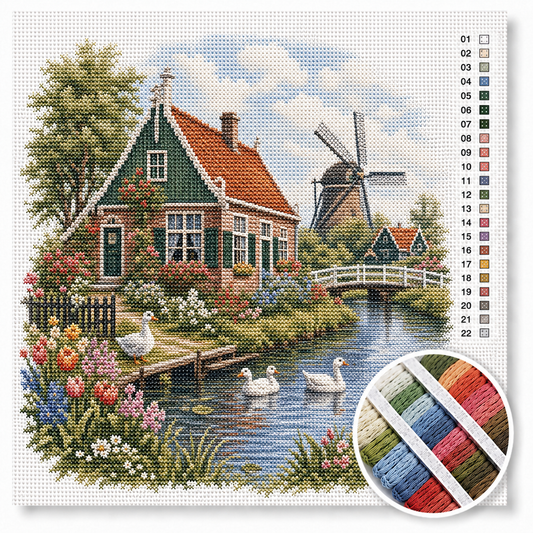
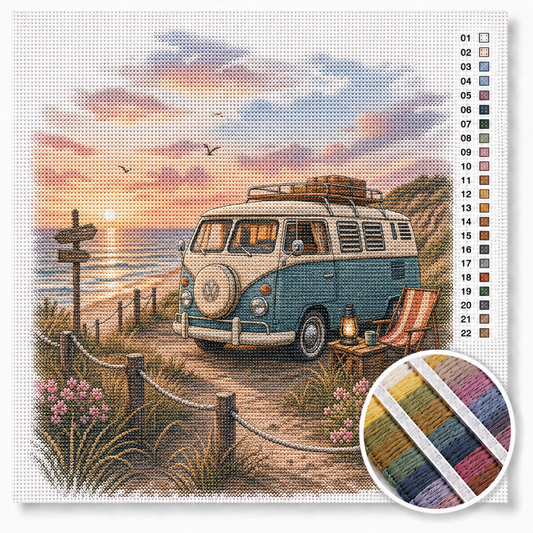
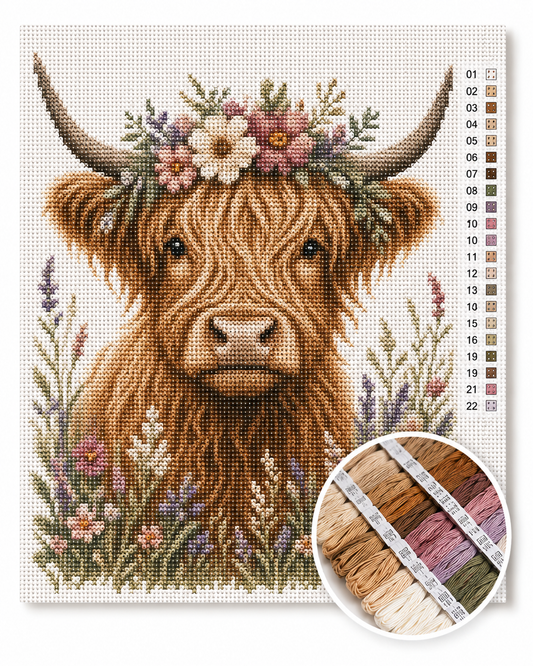
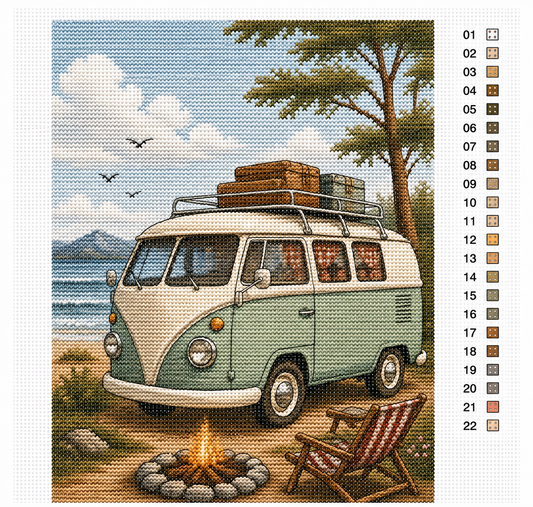
For most projects, an 18–20 cm hoop is ideal. Our custom photo embroidery kits and ready-made designs come complete with the correct fabric size — so your work fits into a standard hoop.
What does an embroidery hoop actually do?
An embroidery hoop (also called an embroidery frame) clamps your fabric between two rings, keeping your working surface taut. That sounds minor, but it makes a big difference:
- Your cross-stitches will all be equally tight — not one loose, the other pulled.
- You work faster because your fabric doesn't constantly shift under your needle.
- You get fewer cramps in your fingers because you don't have to pinch.
For very small projects (think: an initial of 30 × 30 squares), you can go without, but as soon as you're working on something larger than a palm: grab that hoop.
What size embroidery hoop do I need?
The rule of thumb: choose a hoop that fits your entire pattern plus at least 5 cm on each side. Does your work not fit into the hoop in one go? No problem — then you shift the hoop while working. But moving it every time takes time and can flatten your already-stitched stitches.
Here's a handy overview of commonly used sizes:
- 10–13 cm — ideal for mini-projects, small motifs, or if you later want to frame the work in the hoop itself.
- 15–18 cm — the best all-rounder for most beginner patterns. Not too heavy, fits comfortably in your hand.
- 20–25 cm — for larger projects. Slightly heavier, but you'll need to shift it less often.
- 30 cm and larger — only recommended if you use a floor stand; it becomes too cumbersome in your hand.
Our top recommendation for beginners: an 18 to 20 cm hoop. Comfortable size, fits almost any small to medium-sized pattern — like our pre-made designs in the 30 × 40 cm variant.
Wood or plastic? The honest comparison
Both materials work fine. Which one you choose depends on what you value:
Wooden embroidery hoop
- Pros: warm in the hand, pleasant to work with, ideal if you want to hang the finished piece in the hoop itself (looks natural).
- Cons: a bit heavier, sensitive to moisture (don't leave it in a damp bag), slightly more expensive.
- Beechwood is stronger and smoother than cheaper types of wood — an investment that will last you ten years.
Plastic embroidery hoop
- Pros: lightweight, easy to clean, often with a rubber inner ring that holds your fabric extra securely (especially useful on smoother fabrics).
- Cons: less attractive for framing, feels less "crafty."
Our tip: for your first project — a plastic hoop with an anti-slip inner ring is foolproof. If you want to get serious about it afterward or present the work? Invest in a wooden beech hoop.
Complete kit including the right hoop?
In our complete kits, in addition to 14ct Aida, threads, and pattern, you also get tips on which hoop size fits best. View pre-made designs → or have a unique kit made from your own photo →
Embroidery hoop with or without a stand?
For longer embroidery sessions, a hoop with a table stand or lap stand can be wonderful — then you have both hands free to work. Just starting out and not sure if you'll stick with it? Start with a regular hoop. Buy a stand when you know you'll be doing this hobby for a longer period.
How do you properly tension your fabric?
- Loosen the screw of your outer hoop until it is wide open.
- Place the inner hoop flat on the table, lay your fabric over it (centered).
- Press the outer hoop over it, straight down — not at an angle.
- Gently pull the fabric taut from all four directions (not from one corner!) until it sounds like a drum when you tap it.
- Only tighten the screw completely once you are satisfied.
Important: always remove your fabric from the hoop at the end of an embroidery session. Otherwise, you'll get a permanent hoop mark in your work — which often won't come out.
Frequently asked questions
How do I clean an embroidery hoop?
Plastic hoops can simply be washed with lukewarm water and soap. Wooden hoops should be wiped with a slightly damp cloth — never submerge them.
My fabric keeps sagging while working — what am I doing wrong?
The screw is probably too loose, or you're using a hoop without anti-slip on slippery fabric. Try a rubber inner ring or wrap the inner ring with a layer of cotton ribbon.
Can I leave my finished work in the hoop?
Absolutely — a wooden embroidery hoop is a beautiful minimalist way to hang your work. Just finish the back with a circle of felt or fabric.
Ready to get started?
Don't want to search separately for the right materials? Check out our custom photo embroidery kit or one of our ready-made designs — that way, you can be sure everything fits together. Looking for a gift? Our Father's Day selection is ready. Also, read our complete beginner's guide to cross-stitch if you're just starting out.