






Using the DMC color chart: how to choose the right thread colors
Last updated: May 6, 2026 — by Stitchly Studio
Open your embroidery pattern and you'll immediately see them: strange numbers like DMC 310, DMC 727, or DMC 3865. These are not random codes — they are the color numbers of the most famous embroidery floss in the world. In this article, you'll learn how to use a DMC color chart, why it's useful, and how to create your own color palette for projects without a fixed pattern.
What exactly is DMC?
DMC is a French company that has been producing embroidery floss since 1746 (!). Their mouliné floss — the 6-strand cotton recommended by most cross-stitch patterns — is almost a global standard. Patterns from the Netherlands, England, the US, Japan: almost all of them refer to DMC color numbers. That's why a good color chart is so valuable.
What is a DMC color chart?
A DMC color chart is a physical or digital overview of all available colors with their unique number. The official chart currently includes about 500 solid colors, plus dozens of multicolor, glow-in-the-dark, light-effects, and metallic variants.
There are two types of charts:
- Printed chart — all colors as a print. Inexpensive, but print colors always differ from the actual floss. Use as a rough reference.
- Chart with actual floss samples — small, real pieces of thread. More expensive, but infinitely more precise if you want to compare or substitute colors.
For those who embroider regularly: investing in a sample chart is worth its weight in gold. Once you have it, you'll have it for years.
How do you read DMC color numbers?
The numbers may seem arbitrary, but there is some logic behind them:
- Numbers 1–498 are the original solid colors.
- The 500 series mostly consists of dark greens and browns.
- The 700 series covers many red and orange tones.
- The 800 series includes blue and navy shades.
- The 3000+ series are newer colors — often very beautiful and modern.
But don't be misled by the series — some numbers don't fit into their "family." DMC 310 (black), for example, is in the 300 series between orange and brown. The number is simply the unique identifier.
Special notations you often see
- BLANC = white
- ECRU = unbleached cream color
- B5200 = optical white (whiter than BLANC)
- 310 = black
- 4000 series = Coloris (multicolor threads — gradient effects)
Working with the chart for a pattern
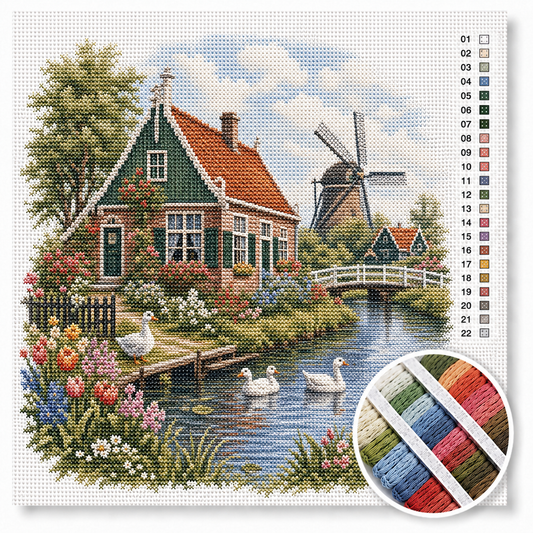
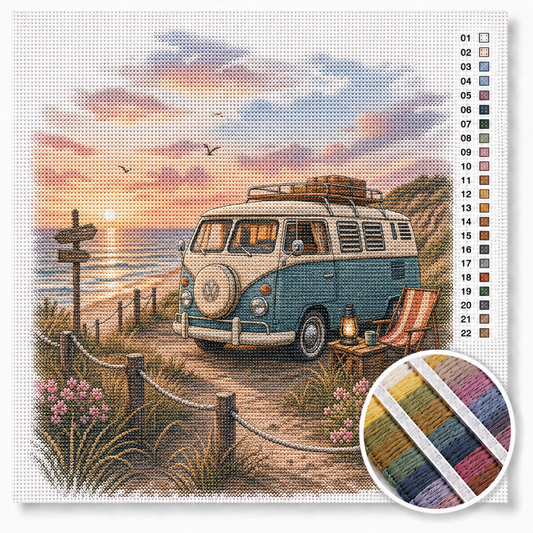
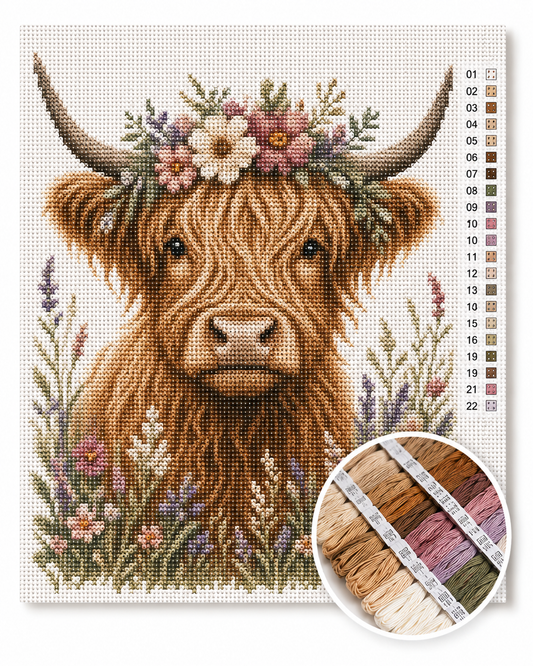
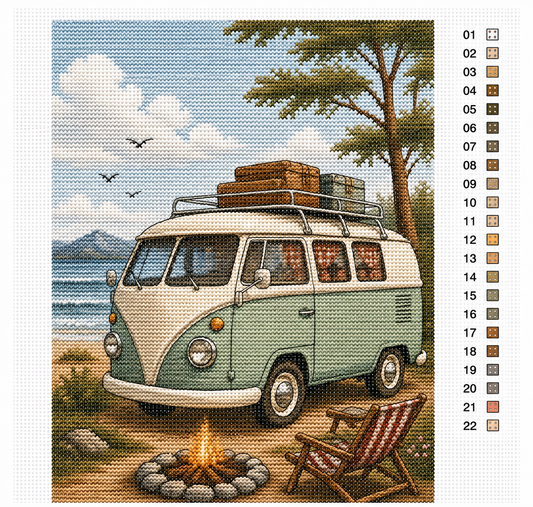
A pattern tells you which DMC number you need for each symbol. Example: ✱ = DMC 727 (soft yellow), ◼ = DMC 310 (black). How do you approach it smartly?
- Make a shopping list. Write down all the numbers before you go to the store (or order online).
- Check what you already have. Use your color chart as a reference and cross them off.
- Buy one skein per color, unless the pattern explicitly indicates more. For most smaller projects, one skein (8 m) is more than enough.
- Sort your floss by number before you start. Use an empty embroidery card or clothespins with labels — this saves a lot of time while working.
Creating your own color palette
Do you want to embroider freely or convert a pattern to your own colors? A few useful principles:
- Work with 4–6 colors for a calm palette. More is possible, but can quickly look busy.
- Combine warm and cool tones for depth. For example: a calm green + a soft pink + a neutral cream.
- Work in color families. Three shades of the same color (light-medium-dark) create beautiful shading.
- Test on a corner of fabric before you begin. Sometimes the combination looks completely different in reality than on the chart.
DMC alternative: other floss brands
Is your local store out of a specific DMC number? Most patterns can also be embroidered with Anchor, Madeira, or J&P Coats. Online, you can find conversion tables that translate DMC numbers to the codes of those brands. Keep in mind: a conversion is almost never 100% identical — minimal color differences are normal.
How do you store your floss by number?
Embroiderers with a lot of floss eventually develop their own system. Popular options:
- Embroidery cards with holes — each number on its own card, alphabetically in a box.
- Bobbins (small plastic spools) on which you wind floss and write the number.
- Hanging files by color in a storage box — visual and practical.
Nothing is more irritating than searching for ten minutes for that one piece of DMC 320. Sort early, save time later.
Frequently Asked Questions
How many meters of floss are in a skein?
A standard skein of DMC mouliné is 8 meters long and consists of 6 divisible strands.
Do DMC colors fade in the sun?
DMC mouliné is colorfast tested, but like all textiles, colors can slowly fade with prolonged exposure to bright sunlight. Do not hang your finished piece in direct sunlight for the best long-term results.
Can I wash DMC floss in the washing machine?
Preferably not. Hand washing in lukewarm water with mild detergent will keep your work looking its best for the longest time.
Ready to embroider?
The easiest way to get started with the right colors: choose our custom photo embroidery kit where the floss is pre-selected by number for you. Also check out our guide to Aida fabric count and the guide to reading patterns.