






Mindful Stitching: Why Cross-Stitch Is So Calming
In a world where every free minute is filled with scrolling, streaming, and multitasking, there's a hobby that does the exact opposite: cross-stitch.
Stitching is slow. Repetitive. Focused. These three qualities are precisely what make it a form of active meditation – scientifically proven by studies on "flow states" and creative hobbies.
What Scientists Say About Stitching and Stress
A study by the British Journal of Occupational Therapy (2013) showed that 81% of regular knitters and stitchers felt noticeably more relaxed after a session. Another study by the Mayo Clinic linked manual hobbies with a reduced risk of depression and cognitive decline.
The mechanism is well understood: when stitching, your heart rate decreases, your cortisol levels (stress hormone) fall, and your brain switches into a meditative alpha-wave state – similar to classic meditation.
Why Cross-Stitch "Clicks" Better Than Meditation
Classic meditation can be frustrating. "Think of nothing" doesn't work when your head is full of to-do lists.
Cross-stitch gives your brain something to do: counting, changing thread, making a stitch. This light, repetitive cognitive task blocks the worrying merry-go-round just as effectively – often even more so.
Three Reasons Why It Works
- Focus on the Present: You can't count and brood about tomorrow at the same time.
- Visible Progress: Every cross brings you closer to the finished picture – a motivating reward cycle.
- Tactile Calming: The steady rhythm of needle and fabric activates your parasympathetic nervous system.
Which Benefits Do Stitchers Notice Most?
- Better concentration in everyday life
- Noticeably reduced stress after 20–30 minutes
- Better sleep with evening stitching
- Meaningful hobby that actually produces results (unlike scrolling)
- Rediscovered patience
How to Build a Stitching Routine
1. Fixed Time, Small Start
Plan 15–20 minutes per day. Better short and regular than 3 hours on the weekend. Evening after dinner is ideal for many.
2. A Dedicated Stitching Spot
A good chair, good lighting (daylight lamp!), fabric and materials within reach. If you have to dig everything out every time, you won't do it.3. Put Away Your Phone
This is non-negotiable. Stitching while scrolling on Instagram negates the stress-reducing effect.
4. Music or Silence
Some stitchers prefer music or audiobooks, others enjoy the silence. Try both.
Which Designs Are Best for Relaxation?
For maximum relaxation, choose a pattern that:
- Is not too complex (less than 10 colors)
- Is not too fine (14 count Aida is ideal)
- You like – motivation is everything
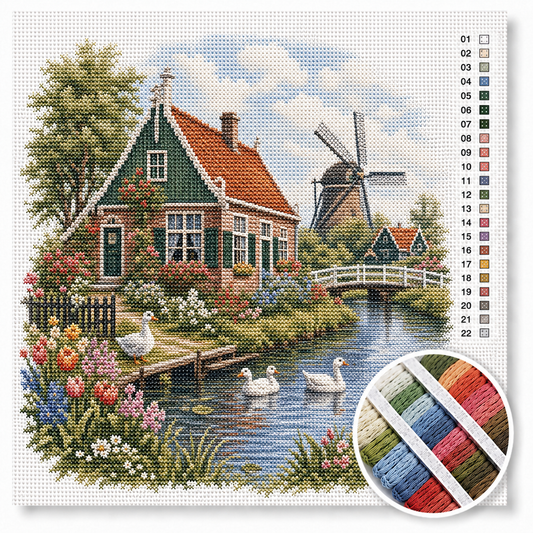
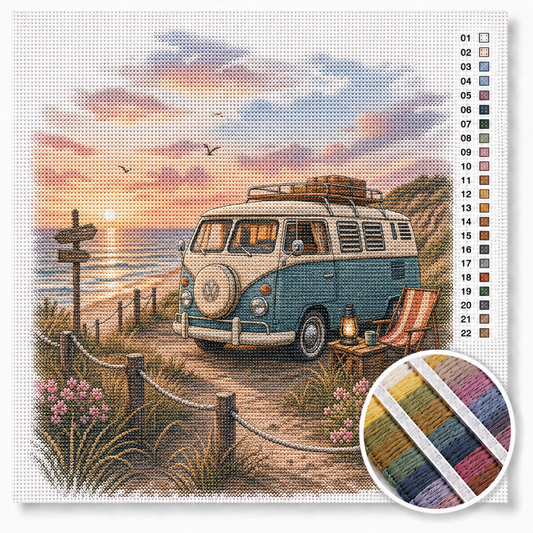
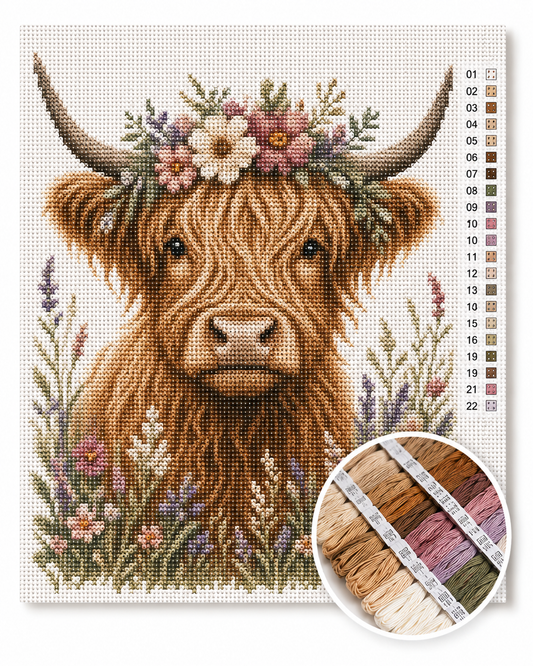
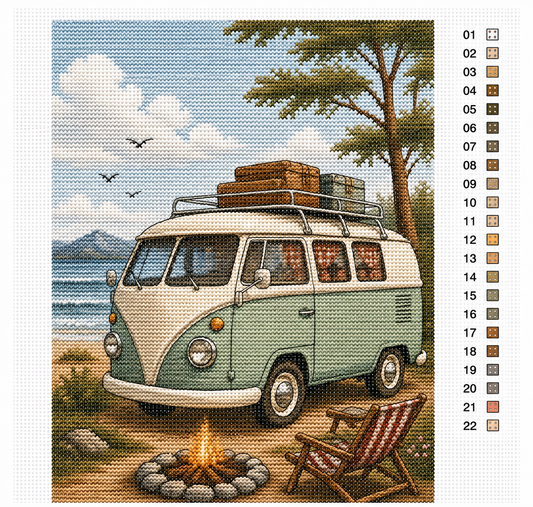
Botanical motifs, calm landscapes, or simple geometric patterns are particularly suitable. Our ready-made cross-stitch kits are specially designed for relaxed stitching.
If Your Mind Is Still Racing
It happens. On difficult days, nothing works – not even stitching. In such moments, it helps to:
- Consciously breathe for 5 minutes before starting
- Stick to a simple color (no changing)
- Accept that today is not a stitching day – without guilt
Stitching Is More Than a Hobby
It's a conscious decision to take time. For yourself. Without a screen, without an algorithm, without optimization. Just you, the fabric, the thread, and a slowly growing picture.
That's what makes it so valuable – and so strangely therapeutic.
Which Kit for Your Anti-Stress Start?
For maximum relaxation, choose a motif that appeals to you and isn't too complex. Our ready-made cross-stitch kits are specially designed for calm stitching: clear designs, soothing nature motifs (cottage, lavender, animals). If you want a personal element, have your own photo converted into a cross-stitch kit.
Frequently Asked Questions
How long does it take until stitching is truly relaxing?
Most stitchers feel the relaxing effect after 15–20 minutes. With regular practice (3–4 times a week), the longer-term effects are noticeable after about 4 weeks.
Does stitching help with anxiety disorders?
It doesn't replace professional help, but many people with anxiety disorders use stitching as a supplementary tool. The repetitive motion has a grounding effect.
Can I use stitching in the office?
Lunch break yes, during calls rather not (concentration!). A 15-minute stitching break can be more productive than 15 minutes of social media.
Why not just paint or knit?
Both are also good. Cross-stitch has the advantage that the task is very clearly defined (counting, stitching) – which is perfect when your mind doesn't want to make creative decisions.