






Cross Stitch for Stress Relief: What Science Actually Says
TL;DR: Cross stitch reliably reduces self-reported stress and physiological arousal in published studies, mostly through the same mechanisms as meditation: focused repetitive attention, slowed breathing, and a flow state. It won't replace therapy or medication, but it's one of the better-evidenced low-effort tools for everyday anxiety. The effect kicks in within 10–15 minutes of stitching.
What the research actually shows
The body of work on craft-and-mental-health is small but consistent. Key findings:
- Self-reported stress drops after 20–40 minutes of cross stitch or knitting in nearly every published survey. A widely cited 2013 study by Riley, Corkhill and Morris in the British Journal of Occupational Therapy found 81% of frequent knitters reported feeling happier after a session.
- Heart rate and blood pressure measurably drop during repetitive needlework, similar to mindful breathing exercises.
- Flow state (the absorbed, time-loses-meaning state described by Mihaly Csikszentmihalyi) is reliably entered during pattern-based stitching once a stitcher has basic competence.
- Mood improvement persists for hours after a session in survey-based studies.
The mechanism is straightforward: repetitive, attention-demanding hand-craft displaces ruminating thought. You can't worry about Monday while you're counting symbols.
Why does cross stitch work for anxiety specifically?
Four overlapping reasons:
- Narrow attentional focus. Anxiety thrives on broad rumination; cross stitch demands narrow focus on a single grid square at a time.
- Predictable rhythm. Each stitch is a tiny, identical action. The repetition activates the same parasympathetic ('rest and digest') response as mantra meditation.
- Visible progress. Anxiety often involves a sense of not getting anywhere. Each completed stitch is concrete progress — a small antidote.
- Tactile engagement. Hands-on activity grounds you in your body, which often eases the disembodied feeling that comes with anxious states.
How it compares to other stress-relief tools
- Vs meditation: Cross stitch works for people who can't sit with closed eyes. Same flow state, easier on ramp.
- Vs running: Different mechanism (endorphin release vs flow), but both reduce baseline anxiety. They stack well — run in the morning, stitch in the evening.
- Vs scrolling: Phone scrolling is the opposite — broad attention, no progress, no body engagement. Cross stitch is a clean replacement for evening scroll time.
- Vs TV alone: TV is passive; cross stitch is gently active. Pairing the two is actually ideal — hands busy, ears free, body grounded.
What to expect when you start
Realistic timeline:
- First 1–2 sessions: Mild frustration as you learn pattern reading. Stress relief is mild.
- Sessions 3–5: The pattern-reading becomes automatic. Stress relief kicks in within 10–15 minutes per session.
- After ~10 sessions: A reliable "my brain shuts up" zone you can access on demand.
Patience matters — the first session is the hardest, and that's where most people stop. Push through to session 3.
How to set up for maximum stress relief
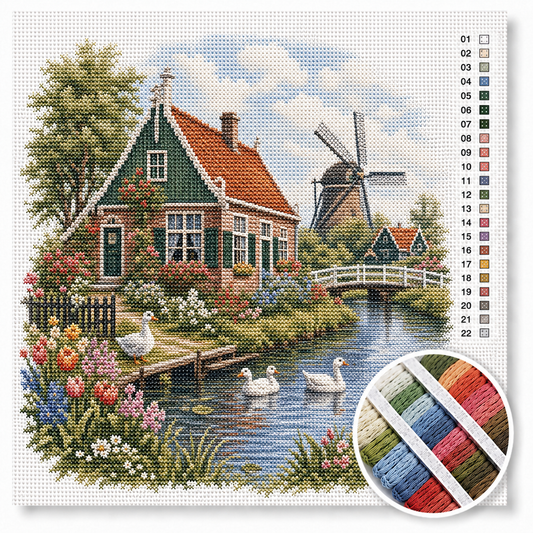
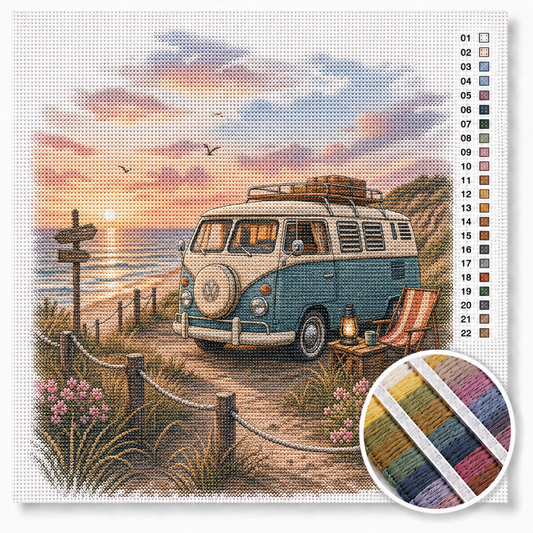
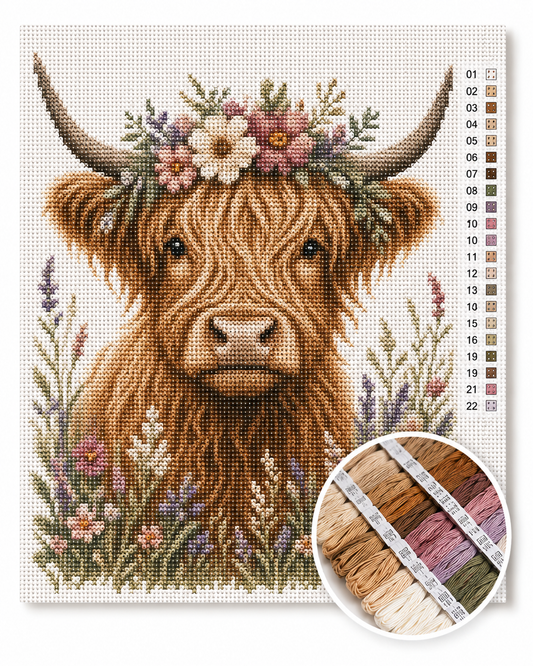
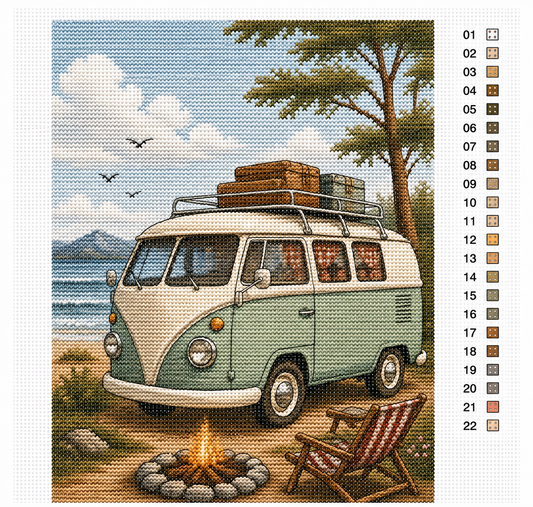
- Choose a pattern you find calming visually — a landscape, animal, botanical. Avoid anything cluttered or busy.
- 11- or 14-count Aida — easier on the eyes than 16/18 count, which can cause tension.
- Soft, ambient audio — instrumental music, ambient sounds, or a podcast you've already heard. Avoid fresh news or true crime.
- Daylight lamp — squinting raises stress, not lowers it. See the lighting and ergonomics guide.
- One dedicated chair, not whatever spot you scroll on. Helps the brain associate that spot with downshifting.
What it won't do
To be honest:
- It won't cure clinical anxiety or depression. See a therapist for those.
- It won't help if you're using it to avoid what's stressing you out. Some problems need addressing, not stitching around.
- It won't work if you pick a frustrating project. Pattern choice matters — calm in, calm out.
Try cross stitch as your evening reset
Pick a calming landscape, animal or botanical — and have it as a complete kit at home within 24 hours.
Frequently Asked Questions
Does cross stitch really reduce stress?
Yes — multiple studies show measurable drops in self-reported stress and physiological markers (heart rate, blood pressure) during and after sessions. The mechanism is similar to mindful breathing.
Is cross stitch better than meditation for anxiety?
Not better — different. It uses the same flow-state mechanism but with an easier on-ramp for people who can't sit still with closed eyes.
How long until cross stitch starts to feel calming?
Usually within 10–15 minutes once you have basic pattern-reading down (around session 3). The first session can feel frustrating — push through.
What's the best cross stitch for stress relief specifically?
Visually calm subjects (landscapes, animals, botanicals) on 11–14 count Aida. Avoid busy or high-detail patterns at first.
Can cross stitch replace therapy or medication for anxiety?
No. It's a helpful daily tool, not a treatment for clinical conditions. Combine it with whatever your therapist or doctor recommends.
In summary
Cross stitch reduces stress in the same way mindful breathing or meditation does — by narrowing attention, slowing breathing, and inducing a flow state — but with a more practical on-ramp. The research is small but consistent. Pick a calming pattern, set up good lighting, and give it three sessions before judging.