






Half stitch vs. full cross stitch: When do you use which technique?
In short: A full cross stitch consists of two diagonal stitches that cross each other — the standard element of every cross stitch design. A half cross stitch is just the first diagonal, often used for backgrounds or softer shading. Three-quarter and quarter stitches fill half squares — typical for curves or diagonals in the motif.
Full Cross Stitch
The basic element: two diagonals that cross. This creates the typical "X" stitches.
- Needle from bottom left to top right — first diagonal.
- Needle from bottom right to top left — second diagonal.
- Important: all stitches must cross in the same direction (e.g., always bottom diagonal left→right, top always right→left).
Half Stitch
Only the first diagonal — no cross.
- When? Backgrounds, gentle transitions, lighter shadows.
- Effect: Fabric shows through, softer image.
- Stitching time: approx. half as long as full cross stitches.
Three-Quarter Stitch
A half cross stitch plus a quarter stitch — fills 75% of a square. In the pattern chart, it is often marked as filled and empty.
- When? For curves or diagonals in the motif where a full cross stitch would be too angular.
- Important: the length of the quarter stitch goes from the corner to the center of the square.
Quarter Stitch
Only a quarter of the square filled — from one corner to the center. Often combined with a three-quarter stitch.
Which technique in which situation?
| Situation | Technique |
|---|---|
| Main motif, clear areas | Full Cross Stitch |
| Background, soft tones | Half Cross Stitch |
| Curves, diagonals | Three-Quarter Stitch + Quarter Stitch |
| Fine outline | Backstitch (not cross stitch) |
How to read half and fractional stitches in the pattern
- Full Cross Stitch: Symbol fills the entire square.
- Half Cross Stitch: Symbol with a diagonal line or semi-transparency.
- Three-Quarter Stitch: Symbol in a corner triangle of the square.
- Quarter Stitch: Symbol in one corner only.
Always check the pattern legend — each designer marks slightly differently.
Common Mistakes
- Changing crossing direction. Makes the image uneven.
- Half cross stitches too strong. They are meant to be background — don't choose too dark.
- Overlooking fractional stitches. For curves, this creates an angular, pixelated look.
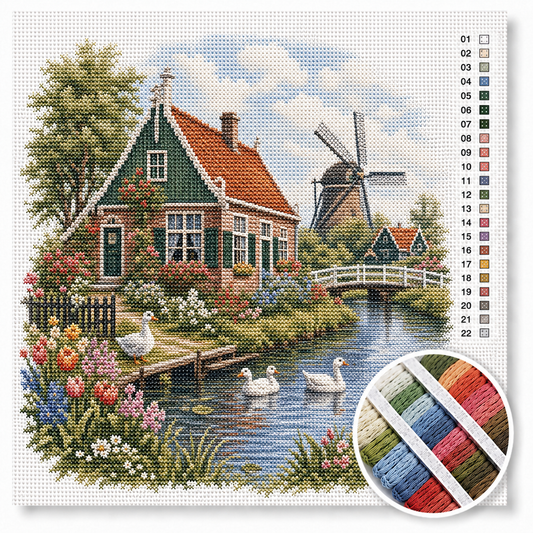
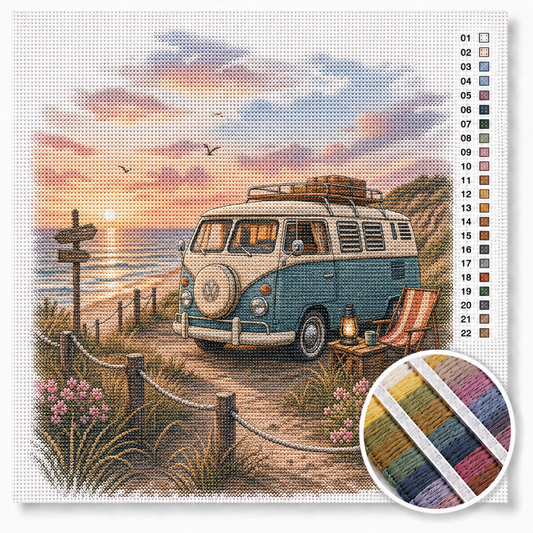
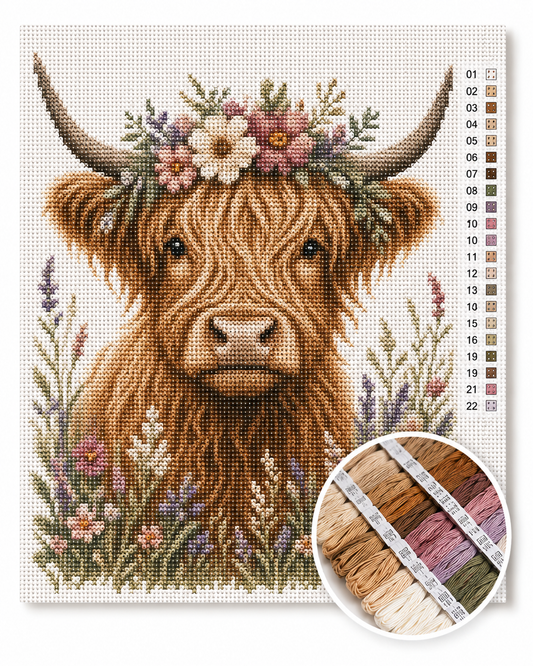
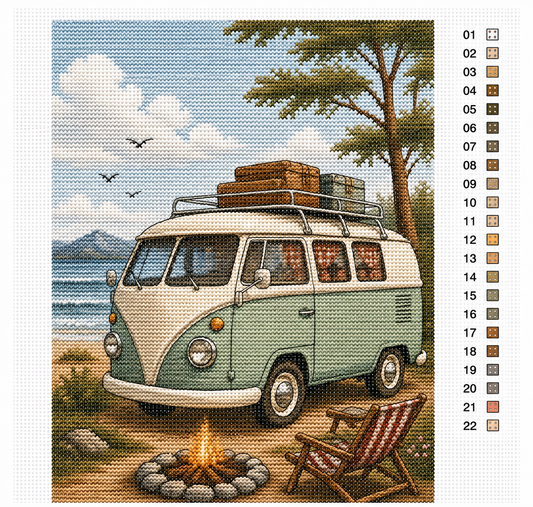
Cross stitch kit that uses all techniques?
Detailed motifs like landscapes and portraits often use all stitch variations.
Frequently Asked Questions
What is the difference between full and half cross stitch?
Full cross stitch = two crossed diagonals (X). Half cross stitch = only one diagonal.
When do you use three-quarter stitches?
For curves and diagonals where full cross stitches would be too angular.
Do all cross stitches have to go in the same direction?
Yes — the top diagonal should always cross in the same direction to make the image appear even.
Are half cross stitches faster?
Yes, about half the time per stitch — ideal for large background areas.
What is a quarter stitch?
A single stitch from a corner to the center of the square — fills a quarter of the square.
Summary
The full cross stitch is the foundation. Half cross stitches provide soft backgrounds. Three-quarter and quarter stitches round off diagonals. Keep all crossing directions consistent, and your cross stitch will look even and professional.